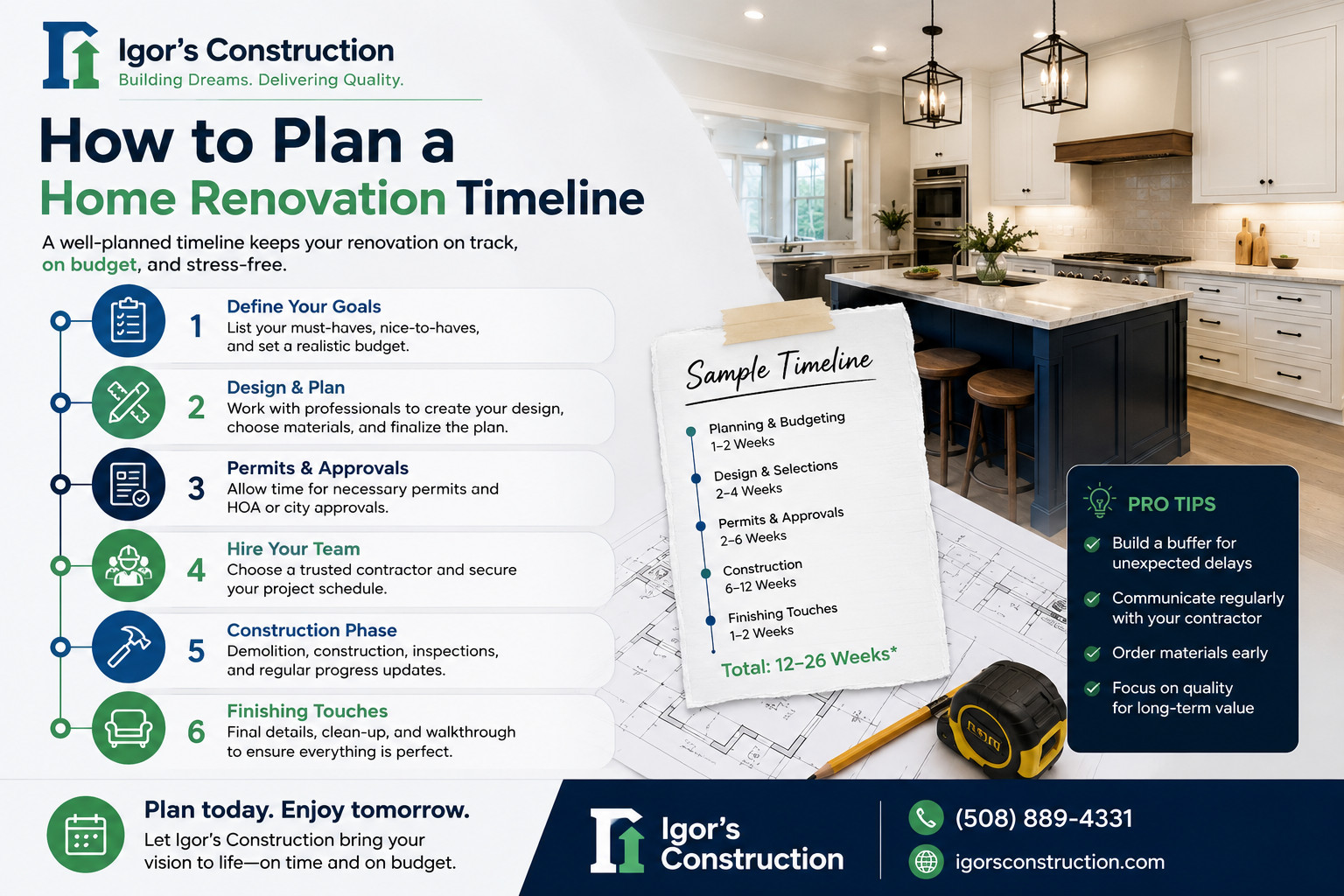
Making an effective home renovation plan goes beyond having design ideas in mind and needs a clear and realistic schedule. Unless well planned in terms of renovation, the projects tend to overrun time and budget. Whether you do a minor upgrade or renovate your whole home, a well-laid-out renovation plan will keep things organized and within scope. Igor’s Construction can assist the homeowners in planning their projects, which minimizes delays and makes the projects run smoothly.
Why a Renovation Timeline Is Important
A renovation schedule is a road map to your project. It chronicles every stage, beginning with planning to its completion, and assists you in the management of time, budget, and expectations.
Devoid of a definite schedule, material, labor, or approval hold-ups can derail the cargo. Completing a proper home remodeling renovation plan would have all the steps leading in the right direction and reduce the unforeseen surprises.
Step 1: Define Your Home Renovation Goals
The beginning of planning a home renovation would be determining what you would like to accomplish.
Do you redecorate one room or the whole house? Knowing where you will go will assist in setting the scope of work, budget, and schedule.
It is also easier to communicate with contractors when there are clear goals and to stop unnecessary change that occurs later in the project.
Step 2: Set a Realistic Budget and Timeline
Budget and timescale are synonymous. Your renovation will take a direct proportion to how big and complicated the project is.
The projects can be done within a few days, such as painting or changing a few fittings, whereas major projects like a kitchen, a complete home remodel, etc., can take weeks or months.
How do you work out your renovation schedule? Add a lot of time in case of any unexpected postponements. This buffer will not allow you to go astray even when things are askew.
Step 3: Design and Permits Planning.
Design and permits. Get down to construction before your final design.
This stage entails material selection, designs, and finishes. It can also entail collaborating with architects or designers on complex projects.
Depending on the local laws, permits may take a long time to be approved, which should be considered in your renovation schedule. This step should not be omitted, as delays or even legal troubles in the future can be expected.
Step 4: Hire the Right Professionals
The selection of contractors with experience is important in making the renovation process smooth.
Such professionals as Igor’s Construction assist in balancing schedules, organizing work, and delivering quality work. They also aid in tracing possible problems in their initial stage, avoiding wastage of time.
The right team can be hired, and this will make sure that your house renovation is on time and meets your expectations.
Step 5: Break Down the Construction Phases
The renovation plan shows a systematic renovation schedule that breaks down the project into easily manageable stages.
The first stage is the demolition, during which the old buildings and materials are eliminated. This is followed by structural work, such as framing, plumbing, and electrical installations.
Once that is complete, the work commences, which includes flooring, painting, and installation of fixtures. A timetable based on each phase is to be implemented so as to prevent overlaps and delays.
Step 6: Order Materials in Advance
One of the most typical causes of renovations lagging is material delays.
Early ordering of materials is a guarantee of availability when required. Other products, such as cabinets, flooring, and custom fixtures, can be delivered over a longer period.
One of the things that effective home remodeling renovation planning involves is planning so that your project does not end up on the ground.
Step 7: Prepare for Unexpected Delays
Although a renovation is carefully planned, there is a likelihood of unexpected occurrences.
Unforeseen structural problems, weather problems, or supply chain delays can impact your schedule. By adding some flexibility to your schedule, you can deal with such circumstances without significant inconveniences.
Any realistic renovation schedule will always have a contingency time in the case of such situations.
Step 8: Final Inspection and Completion
The last phase of the home renovation process is the inspections and the final touches.
This involves inspection of all installations and checking that all have been made to meet the safety standards, and doing any incidental repairs. Afterwards, a final walkthrough will ensure that the project is satisfactory to your expectations.
This will be the beginning of your victorious renovation project.
Final Thoughts
To have a successful and smooth renovation, it is important to plan a home renovation timeline. Starting with goals and budgeting, to the phases of construction, all the steps contribute to the attainment of the intended goal.
Homeowners can effectively renovate their houses with fewer problems and delays by properly planning the renovation and having the help of professionals, such as Igor’s Construction. An appropriately designed schedule of the renovation will not only save money and time but also make the remodeling process stress-free.
FAQs
It depends on the magnitude of the project. Remodeling a home may take several months, with minor remodeling only taking days.
The first step of renovation planning is to define your goals and project its scope.
To maintain your renovation schedule, get the materials beforehand, hire qualified labor, and also have buffer time for any unforeseen event.
Yes, a high number of projects are based on permits based on local rules and the magnitude of the work.
It assists in controlling, balancing, and maintaining the project schedule.